Laurie Brown: Recent Terrains - Terraforming the American West
Softcover | 30.48 x 1.85 x 17.78 cm | 112 pp
John Hopkins University Press | 2000 | 9780801864001
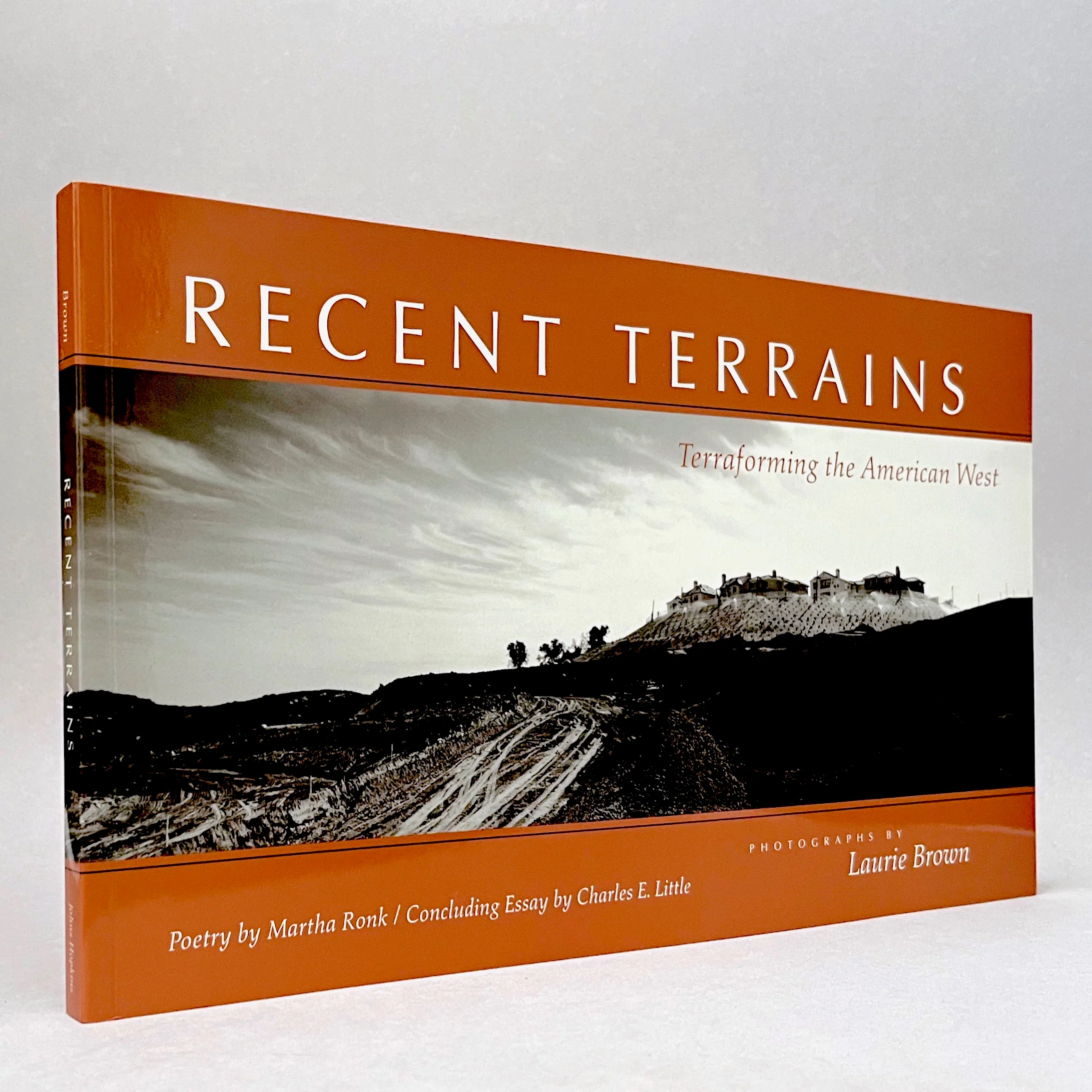
In this volume of 60 black-and-white panoramas, photographer Laurie Brown documents the changing landscape along the western edge of Southern California. These stark images reveal a world scraped and reshaped by construction equipment - boulders pushed aside, stretches of earth flattened and then measured with surveyor sticks. High-tech housing developments rise in these places, lines of identical homes that simultaneously offer a pleasing vision of order and a numbing prospect of sterile conformity.
Taken during the last decade of the 20th century, these photographs serve as an archive of change at a specific place on the coastal edge of California at the turn of the millennium. But these images have larger relevance for all of us, exploring our ideas about what constitutes a home and what defines our sense of community.
The book is divided into three sections, each prefaced by a poem by Los Angeles poet Martha Ronk; it concludes with an essay by writer and conservationist, Charles E. Little.
Original: $10.00
-70%$10.00
$3.00Product Information
Product Information
Shipping & Returns
Shipping & Returns
Description
Softcover | 30.48 x 1.85 x 17.78 cm | 112 pp
John Hopkins University Press | 2000 | 9780801864001
In this volume of 60 black-and-white panoramas, photographer Laurie Brown documents the changing landscape along the western edge of Southern California. These stark images reveal a world scraped and reshaped by construction equipment - boulders pushed aside, stretches of earth flattened and then measured with surveyor sticks. High-tech housing developments rise in these places, lines of identical homes that simultaneously offer a pleasing vision of order and a numbing prospect of sterile conformity.
Taken during the last decade of the 20th century, these photographs serve as an archive of change at a specific place on the coastal edge of California at the turn of the millennium. But these images have larger relevance for all of us, exploring our ideas about what constitutes a home and what defines our sense of community.
The book is divided into three sections, each prefaced by a poem by Los Angeles poet Martha Ronk; it concludes with an essay by writer and conservationist, Charles E. Little.